Shoe Store.
Size-run inventory and box-level tracking for footwear retail.
Built For You, Configured By Us.
Matrix inventory by size and width, transfer tracking between stores, and special-order workflows that don't lose the sale.
Loyalty keeps sneakerheads coming back to you first.
- ★Inventory & barcode managementTrack thousands of SKUs, matrix items by size and color, and manage receiving, counts, and shrink from the same screen your staff already uses.
- ★Gift cards & loyalty built inBranded gift cards and loyalty programs turn one-time shoppers into regulars — set up and running without a separate vendor or extra hardware.
- ★eCommerce sync availableKeep brick-and-mortar and online inventory in lockstep with WooPOS-style sync, so you sell one catalog everywhere without overselling stock.
- ★Multi-location reportingRoll up sales, margin by category, and dead-stock reporting across every store, with per-location user permissions and one consolidated view.
What It’s Really Like To Run A Shoe Store.
Shoes are the deepest inventory problem in soft goods. One style means a dozen sizes, plus widths, plus colorways — and the sale only happens if the 10.5 is actually in the back when the customer is sitting in the chair. Size runs break unevenly, so reordering is a constant judgment call, and every fitting is staff time: measure, fetch, lace, walk. Whether you sell running shoes with gait analysis, work boots to crews, or kids’ shoes twice a year to the same families, service is the whole difference between you and a warehouse.
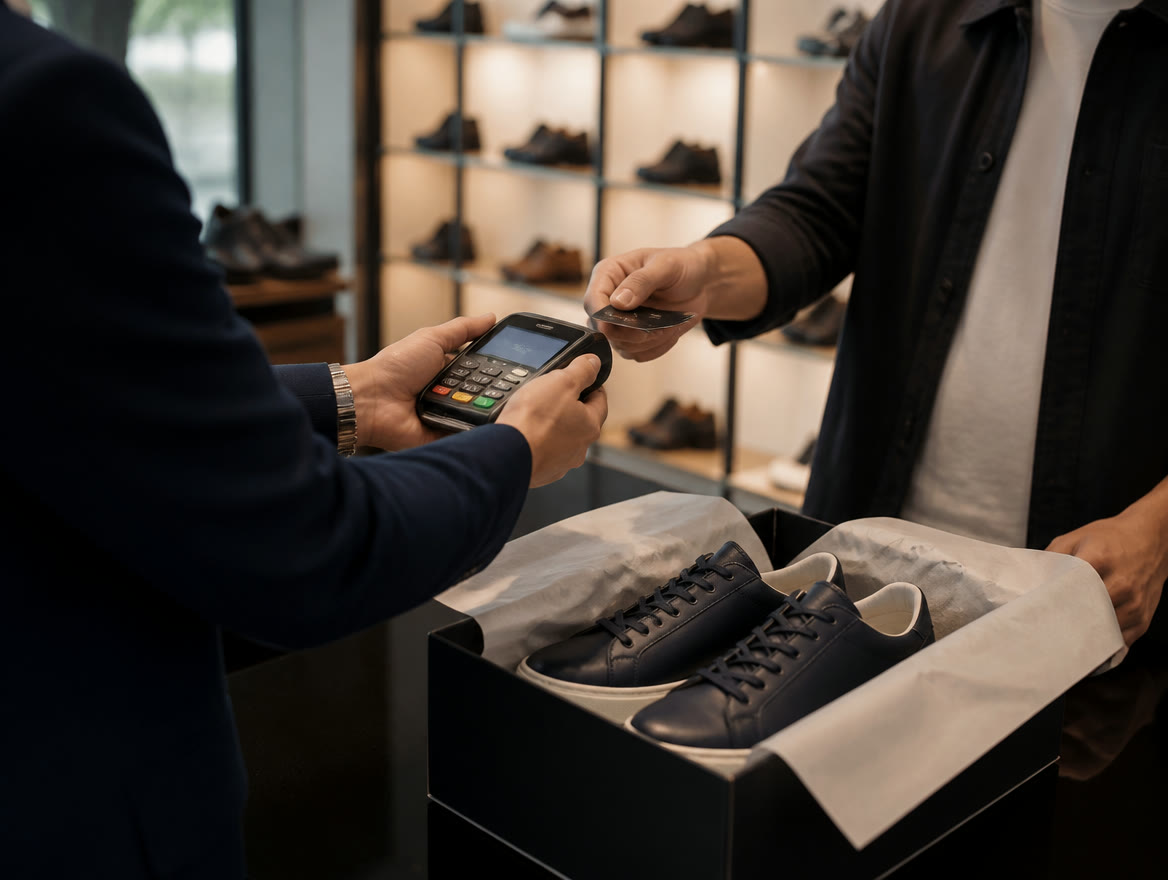
Payments add friction exactly where you’ve worked to remove it. The customer who tried on four pairs shouldn’t wait behind a slow terminal to buy one. Special-ordering the missing size means taking a deposit today and a balance next week — two transactions, one sale, and a phone call with a card number if you’re not careful. Returns are constant in footwear, and the processing fees on refunded pairs rarely come back. Meanwhile school-season weekends slam a register sized for a Tuesday.
In footwear, the sale isn’t the style — it’s the size: a broken size run loses sales silently, and your POS is the only witness.
Where Payments Hurt
- ★Size-run inventory drifts when the POS doesn’t track by size and width
- ★Special orders mean split deposit-and-balance payments handled by hand
- ★High return rates burn processing fees that refunds don’t give back
- ★Back-to-school weekends overwhelm a single register
How Lone Star Fixes It
- ★Clover or WooPOS with size/width matrix inventory, so a broken run shows up in a report before it costs a sale
- ★Card-on-file special orders: deposit today, automatic balance when the size arrives — no keyed cards over the phone
- ★A second SwipeSimple mobile reader for line-busting on school-season weekends, funded by up to $5,000 toward a POS upgrade
- ★Dual pricing with compliant Texas signage and a free statement review to see what returns really cost you
Shoe Store Owners Ask Us
How should I handle special orders for out-of-stock sizes?
Take a deposit on a securely stored card, then charge the balance automatically when the pair arrives. The customer approves once, nothing is keyed over the phone, and abandoned special orders drop noticeably.
Do I lose money on returned shoes beyond the refund?
Usually yes — most processors keep the fees from the original sale even after a refund. In a high-return category like footwear, that adds up; our free statement review quantifies it and our pricing softens the blow.
Is Lone Star’s support actually local?
Yes — we’re Dallas / Ft. Worth-based and our reps work with DFW retailers face to face. If your terminal misbehaves the Friday before back-to-school weekend, you’re calling someone in Texas who can act, not a call center abroad.
Explore Retail
Ready To See It In Action?
Call (214) 838-1818 and a specialist will walk you through the right setup for your business — and ask about up to $5,000 to upgrade your POS.