Convenience Store.
Thousands of SKUs, age verification, and lottery-friendly reporting for c-stores.
Built For You, Configured By Us.
Fast scanning, ID checks for restricted items, and shrink-fighting inventory controls built for convenience retail.
KORONA and Clover options sized to your counter.
- ★Inventory & barcode managementTrack thousands of SKUs, matrix items by size and color, and manage receiving, counts, and shrink from the same screen your staff already uses.
- ★Gift cards & loyalty built inBranded gift cards and loyalty programs turn one-time shoppers into regulars — set up and running without a separate vendor or extra hardware.
- ★eCommerce sync availableKeep brick-and-mortar and online inventory in lockstep with WooPOS-style sync, so you sell one catalog everywhere without overselling stock.
- ★Multi-location reportingRoll up sales, margin by category, and dead-stock reporting across every store, with per-location user permissions and one consolidated view.
What It’s Really Like To Run A Convenience Store.
A c-store is a thousand tiny decisions a day. You’re managing 3,000 SKUs in 2,400 square feet, watching shrink walk out the door in a jacket pocket, keeping the coolers full, the coffee fresh, and the lottery terminal fed. Margins on packaged goods are thin enough that a single case of vaped inventory or a mis-rung carton of cigarettes shows up in the week’s numbers. Your busiest fifteen minutes come in bursts — morning coffee, lunch, and the after-work rush — and the line has to move.
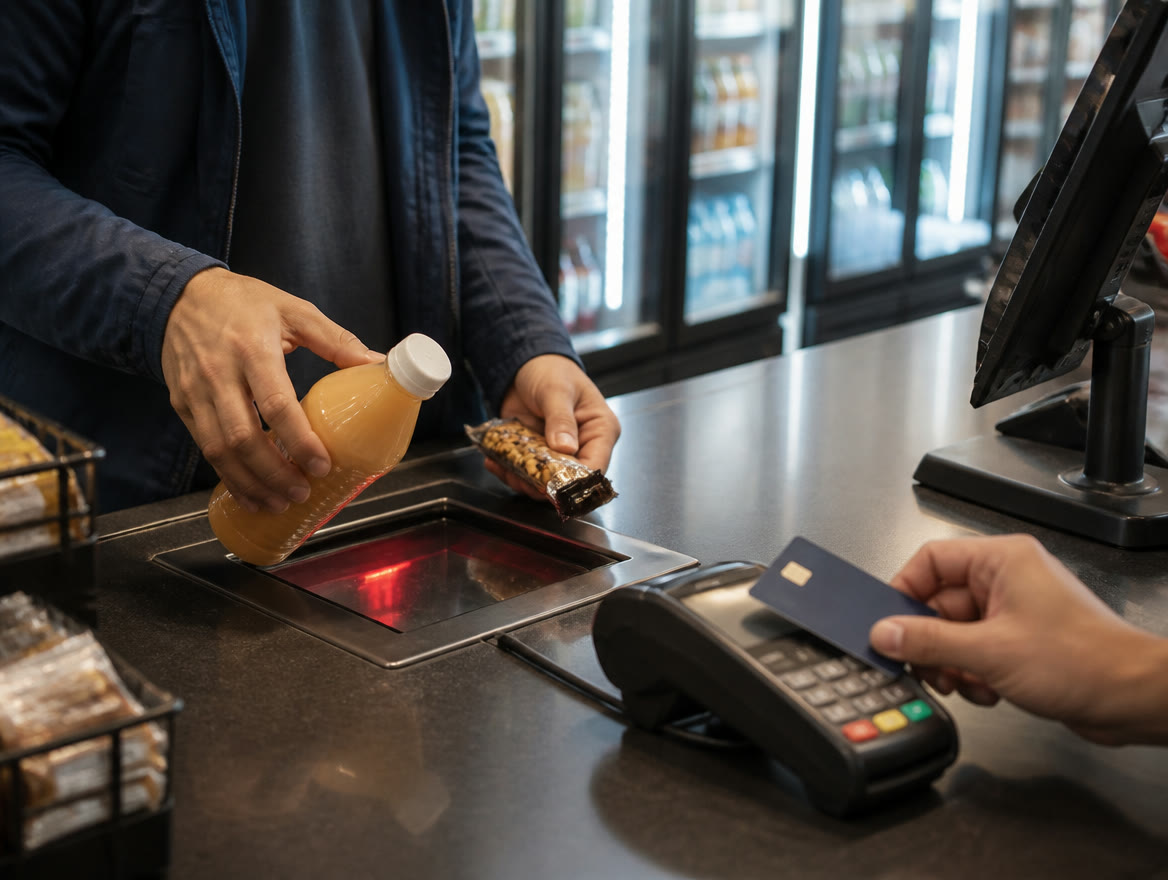
Payments hit c-stores harder than almost anyone because the tickets are small. A $3 energy drink on a card can carry a fixed per-transaction fee that eats a third of your margin on the item. You need EBT for snacks, age verification prompts for tobacco and beer, and a register that doesn’t let a new cashier skip either one. And if the terminal goes down at 7 a.m., you’re not losing a sale — you’re losing your regulars’ morning routine.
On a $4 card sale, a $0.25 fixed fee alone is over 6% of the ticket — small-ticket pricing isn’t a luxury for a c-store, it’s survival.
Where Payments Hurt
- ★Fixed per-transaction fees crush margins on $2–$5 tickets
- ★EBT, lottery, and card sales settle on different schedules, muddying the daily count
- ★Age-restricted items depend on cashiers remembering to check ID
- ★A single terminal outage during the morning rush sends regulars elsewhere
How Lone Star Fixes It
- ★KORONA POS with built-in age verification prompts, shrink reporting, and EBT support at the register
- ★Small-ticket interchange optimization — understand what you’re paying now with our guide to interchange
- ★Dual pricing to recover card costs on small tickets, with compliant Texas signage handled for you
- ★Rugged PAX or Dejavoo countertop terminals plus up to $5,000 toward a POS upgrade, backed by same day funding
Convenience Store Owners Ask Us
How do I stop card fees from eating my margin on small sales?
Two levers: small-ticket interchange pricing, and dual pricing that passes the card cost to the card price. Most c-stores use both. A free statement review shows which one saves you more at your volume.
Can my POS force ID checks on beer and tobacco?
Yes — KORONA POS and similar systems halt the transaction until the cashier scans or enters a valid ID for age-restricted SKUs. It protects your licenses even on a new hire’s first shift.
What happens if my terminal goes down during rush?
With Lone Star you call a Dallas / Ft. Worth-based support line, not an overseas queue. We can often reprogram or troubleshoot remotely in minutes, and local replacement hardware ships fast — because we know a c-store can’t take cash-only for a day.
Explore Retail
Ready To See It In Action?
Call (214) 838-1818 and a specialist will walk you through the right setup for your business — and ask about up to $5,000 to upgrade your POS.