Grocery Store.
Scale integration, EBT, and lane speed — grocery-grade POS without enterprise pricing.
Built For You, Configured By Us.
Weighted items, EBT/SNAP acceptance, and multi-lane setups engineered for throughput.
Perishables reporting cuts shrink where it hurts most.
- ★Inventory & barcode managementTrack thousands of SKUs, matrix items by size and color, and manage receiving, counts, and shrink from the same screen your staff already uses.
- ★Gift cards & loyalty built inBranded gift cards and loyalty programs turn one-time shoppers into regulars — set up and running without a separate vendor or extra hardware.
- ★eCommerce sync availableKeep brick-and-mortar and online inventory in lockstep with WooPOS-style sync, so you sell one catalog everywhere without overselling stock.
- ★Multi-location reportingRoll up sales, margin by category, and dead-stock reporting across every store, with per-location user permissions and one consolidated view.
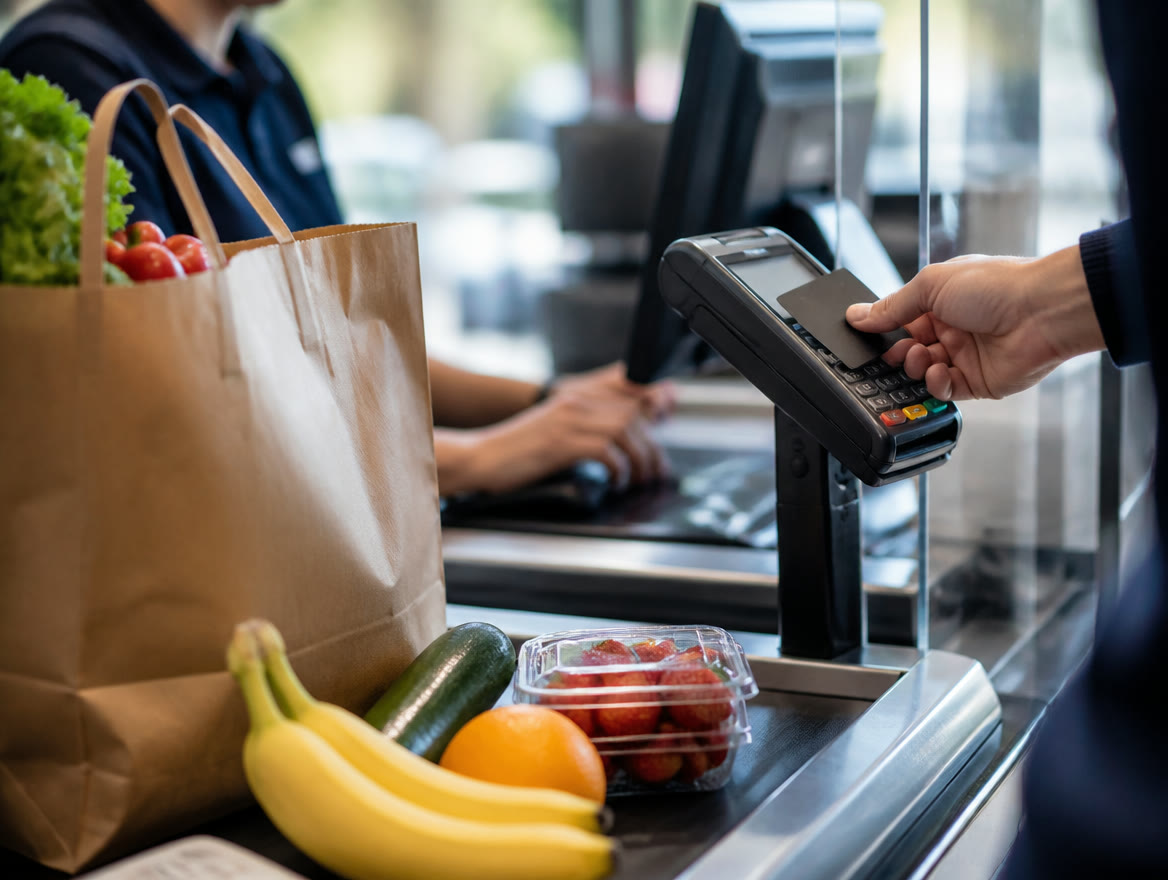
What It’s Really Like To Run A Grocery Store.
Grocery is margin management at scale. You’re working with net margins in the low single digits, so success lives in the details: scale-integrated pricing on produce, deli, and meat; shrink patrol on perishables; vendors delivering daily; and a front end that has to fly, because in groceries the line is the experience. Your product mix spans thousands of SKUs, some sold by the pound, some by the each, some age-restricted, some WIC-eligible — and the register has to know the difference every time.
Payments in grocery are their own specialty. EBT and SNAP mean split-tender transactions — part benefits, part card, part cash — that your system has to divide correctly by eligible item. Weighted items require certified scale integration between the scale, the POS, and the payment flow. Debit routing decisions you never see determine whether you keep or lose a chunk of your thin margin. And a slow pinpad at register three backs up the entire store.
With grocery net margins commonly cited in the 1–3% range, poorly routed card fees can rival your entire profit on a basket.
Where Payments Hurt
- ★EBT/SNAP split-tender transactions fail or slow down at the worst moments
- ★Weighted-item and scale integration breaks between the POS and the pinpad
- ★PIN debit routing is invisible on your statement but decides real money
- ★Thin margins mean every basis point of processing cost is felt
How Lone Star Fixes It
- ★KORONA POS with certified scale integration, EBT/SNAP split tender, and WIC-eligible item handling built in
- ★Debit routing optimization — start with our plain-English guide to interchange to see where grocery money leaks
- ★Fast PAX pinpads at every lane plus up to $5,000 toward a front-end POS upgrade
- ★A free statement review from a Dallas / Ft. Worth-based rep who can read a grocery statement, including your EBT and debit mix
Grocery Store Owners Ask Us
Can you handle EBT and SNAP at my registers?
Yes — we set up EBT acceptance with proper split-tender support, so a basket of eligible and non-eligible items divides automatically between benefits and a card or cash. Your cashiers just ring the sale.
Why does debit routing matter for a grocery store?
Because in grocery, much of your volume is debit, and the network each transaction routes through changes what you pay. Optimized routing on a grocery’s volume often saves more than a headline rate cut would.
Do you understand independent grocers, or just restaurants?
Grocery is one of our core verticals. Lone Star’s Dallas / Ft. Worth-based team works with independent and ethnic grocers across DFW — scale integration, EBT, and all — and our free statement review is built to handle grocery’s messy statements.
Explore Retail
Ready To See It In Action?
Call (214) 838-1818 and a specialist will walk you through the right setup for your business — and ask about up to $5,000 to upgrade your POS.