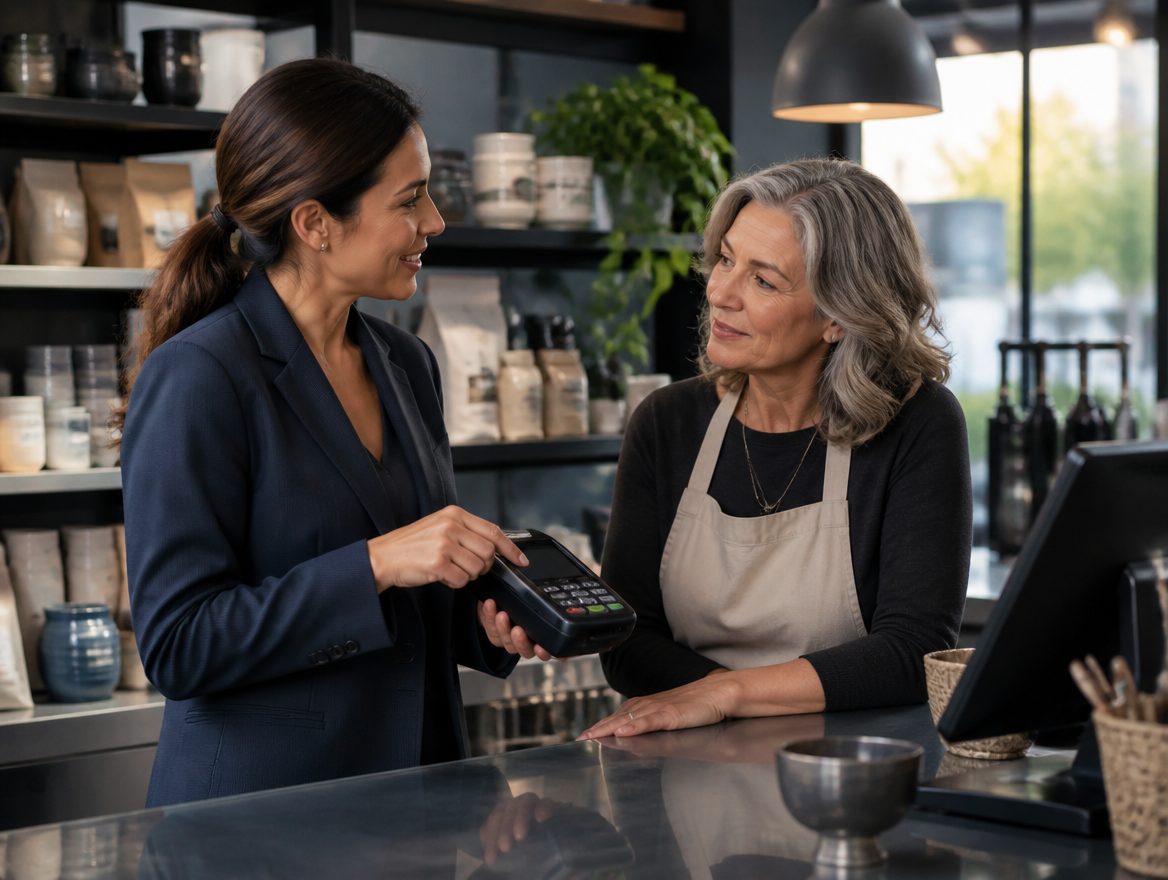
Boutique.
Beautiful, simple POS that matches your store's aesthetic — and syncs to your webstore.
Built For You, Configured By Us.
Clean hardware on the counter, inventory that syncs with your online shop, and clienteling notes that make regulars feel known.
Big-retail power without big-retail clutter.
- ★Inventory & barcode managementTrack thousands of SKUs, matrix items by size and color, and manage receiving, counts, and shrink from the same screen your staff already uses.
- ★Gift cards & loyalty built inBranded gift cards and loyalty programs turn one-time shoppers into regulars — set up and running without a separate vendor or extra hardware.
- ★eCommerce sync availableKeep brick-and-mortar and online inventory in lockstep with WooPOS-style sync, so you sell one catalog everywhere without overselling stock.
- ★Multi-location reportingRoll up sales, margin by category, and dead-stock reporting across every store, with per-location user permissions and one consolidated view.
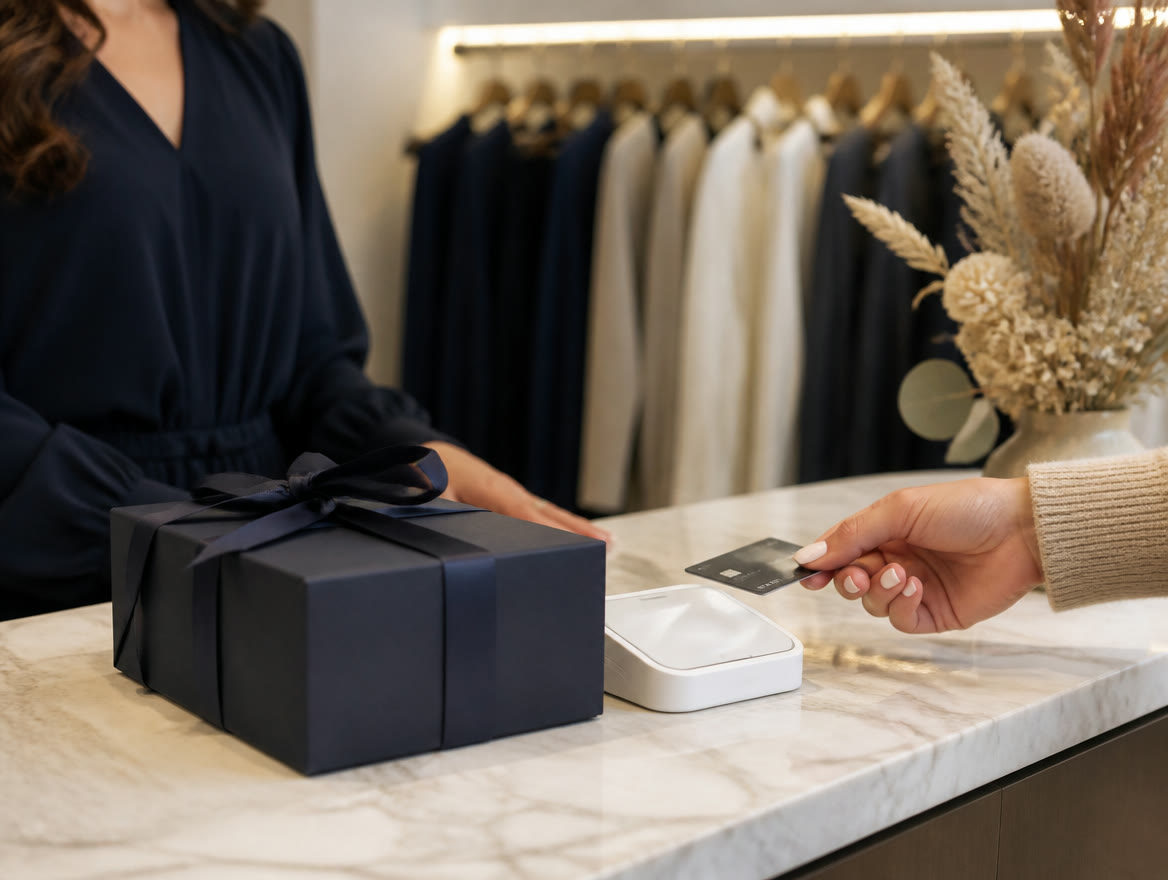
What It’s Really Like To Run A Boutique.
A boutique lives on taste. You hand-pick every line at market, you know your regulars by name and by size, and half your sales start with an Instagram story you posted from the stockroom. Whether you’re in Deep Ellum, Bishop Arts, or a small-town square outside Fort Worth, the job is the same: keep the racks curated, keep the vibe right, and turn foot traffic and followers into loyal customers who come back every season without a corporate playbook telling you how.
Payments should be the easy part, and somehow they’re not. Your average ticket is higher than a chain store’s, so a flat 3% quietly takes more dollars per sale. You sell in person, over DMs, and at pop-up markets, and each channel seems to want its own reader and its own statement. Invoicing a regular for a hold means chasing a payment link. And the free reader you started with was never built for a shop doing real volume.
On a $120 average boutique ticket, a 3% processing rate takes $3.60 from every single sale — before rent, buying trips, or payroll see a dime.
Where Payments Hurt
- ★Higher average tickets mean flat-rate processing quietly takes more dollars per sale
- ★In-store, DM, and pop-up sales run through different readers and statements
- ★Payment links for holds and pre-orders get lost, delaying cash
- ★Starter readers freeze or drop signal at markets and trunk shows
How Lone Star Fixes It
- ★Clover in-store plus SwipeSimple for pop-ups and trunk shows — one account, one statement
- ★Dual pricing that shows a cash price and card price, so your best customers choose how they pay — compare options in our dual pricing guide
- ★Same day funding so weekend market sales are in the bank before Monday’s vendor invoices hit
- ★A free statement review with a Dallas / Ft. Worth-based rep — bring the statement from that free reader and see what it actually costs
Boutique Owners Ask Us
What’s the best way to take payments at pop-up markets?
A modern mobile reader like SwipeSimple on your phone handles tap, dip, and swipe over cellular, and it settles into the same account as your shop counter. No separate statement, no juggling two providers.
Can I offer a cash discount without confusing customers?
Yes — done right it’s dual pricing: the shelf or receipt shows both a cash price and a card price. Texas allows it with proper posting, and Lone Star programs the terminal and provides the signage so it’s clear, not awkward.
Will I get real support or a call center?
You get a Dallas / Ft. Worth-based team that answers the phone. If your terminal acts up before a Saturday trunk show, you’re talking to someone local who can fix it or overnight a replacement, not a ticket queue.
Explore Retail
Ready To See It In Action?
Call (214) 838-1818 and a specialist will walk you through the right setup for your business — and ask about up to $5,000 to upgrade your POS.