Government.
Compliant payment acceptance for municipalities, utilities, and agencies.
Built For You, Configured By Us.
Service fee models, PCI-compliant portals, and reporting that satisfies auditors.
Citizens pay online, by phone, or at the counter — reconciliation stays clean.
- ★Invoicing & card-on-file billingSend invoices with pay links, store cards on file for repeat accounts, and automate recurring billing — so your A/R stops being a part-time job.
- ★Mobile payments in the fieldTap-to-pay on a phone, Bluetooth readers, and text-to-pay get you paid on-site instead of invoicing after the fact and waiting weeks to collect.
- ★Appointment & dispatch friendlyPayment tools that fit how service businesses actually run — deposits at booking, balances at completion, and card-on-file for standing appointments.
- ★Next-day or same day fundingFast funding smooths the cash-flow gap between doing the work and getting paid, so payroll and materials never wait on a slow settlement.
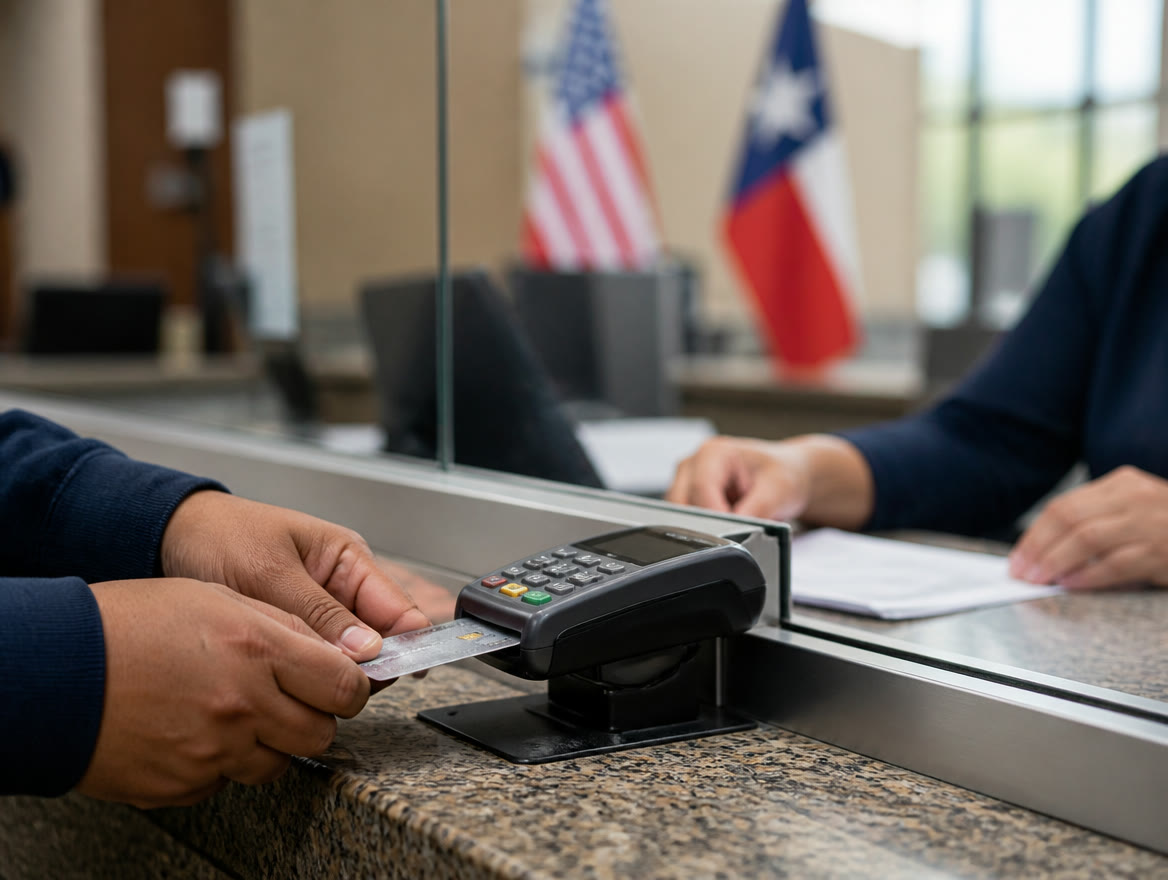
What It’s Really Like To Run A Government.
You collect for a public entity — utility bills, permits, court fines, park reservations, records requests. Every dollar is public money, so every payment has to reconcile to the fund and line item, survive an audit, and follow procurement rules that were written before anyone said “tap to pay.” Your clerks take payments at the counter, by mail, over the phone, and through a portal that was state of the art a decade ago. And the council wants it all modernized without raising a single fee.
Payments are a budget line you can’t easily pass along. Absorbing card fees on thousands of utility payments adds up fast, but adding service fees has to be done exactly right to stay compliant. Phone-in payments get keyed at penalty rates. Purchasing cards from other agencies settle expensively without line-item data. And PCI compliance across a counter terminal, a phone line, and a web portal is a genuine burden for an IT department of two.
A city absorbing card fees on thousands of utility payments a month is quietly funding a budget line that a compliant service-fee model can reduce to zero.
Where Payments Hurt
- ★Absorbed card fees on utility and permit payments drain the general fund.
- ★Phone-in payments keyed by clerks settle at the highest rates.
- ★Agency purchasing cards without level-2/3 data cost more than they should.
- ★PCI scope across counter, phone, and portal overwhelms small IT staff.
How Lone Star Fixes It
- ★Compliant service-fee and convenience-fee programs configured to card-brand government rules, so residents who pay by card cover the cost.
- ★Level-2/3 data on purchasing-card transactions for lower government interchange.
- ★Hosted, tokenized payment pages through Authorize.net or NMI that shrink PCI scope — see tokenization explained.
- ★ACH invoicing for recurring utility drafts, with the cost comparison laid out in ACH vs. cards.
Government Owners Ask Us
Can a Texas municipality add a fee for card payments?
Government entities have specific card-brand programs that allow properly disclosed service fees, which work differently from retail surcharging. We configure the program to those rules and to Texas requirements, and we document it so it stands up in an audit.
How do we reduce PCI compliance burden for a small staff?
Move card entry off your systems: hosted payment pages, tokenized card-on-file, and P2PE-validated terminals mean cardholder data never touches your network. That collapses your PCI questionnaire from hundreds of controls to a manageable checklist.
Do you understand public-sector procurement?
Yes — we’re a Dallas / Ft. Worth-based company and we work through quotes, RFPs, and interlocal timelines rather than around them. You’ll have a named local contact through evaluation, award, and every budget season after.
Explore Services
Ready To See It In Action?
Call (214) 838-1818 and a specialist will walk you through the right setup for your business — and ask about up to $5,000 to upgrade your POS.