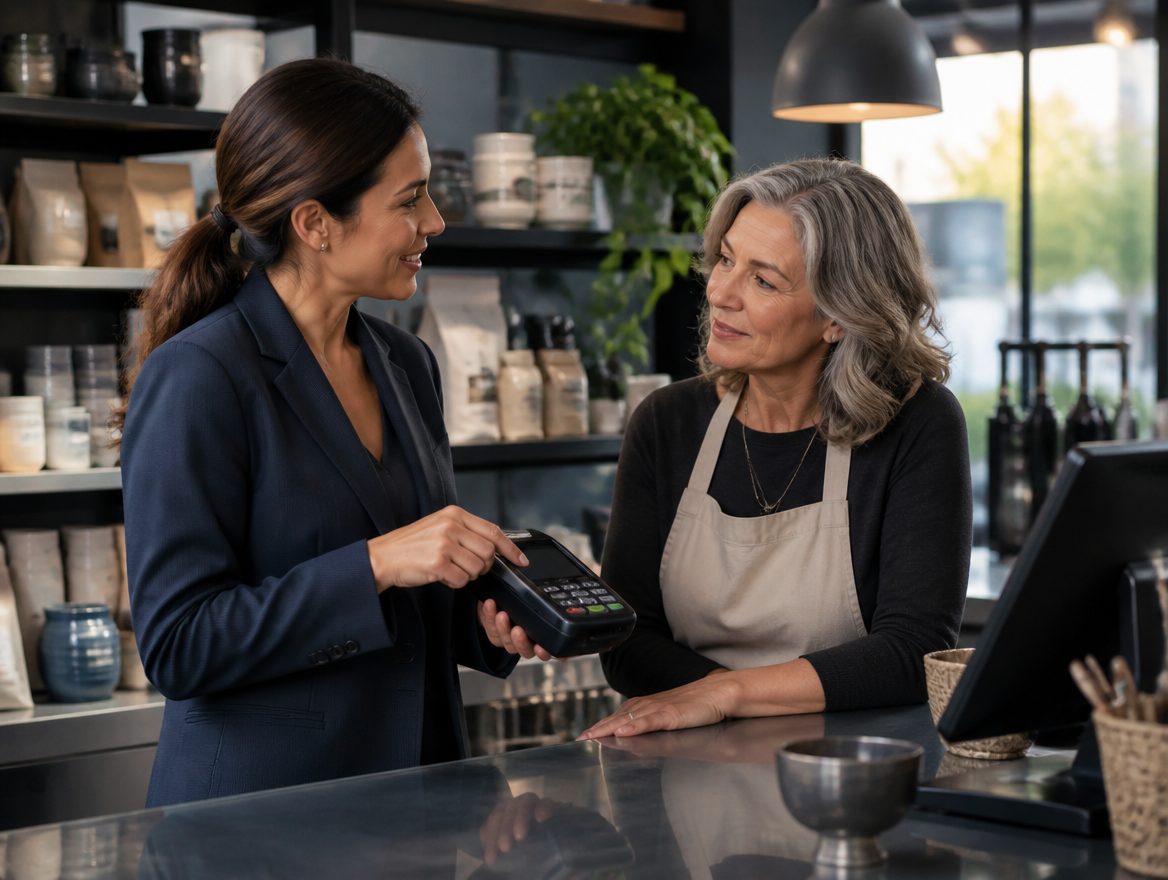
Mobile Processing.
Turn phones into terminals — apps and readers for payments in the field.
Built For You, Configured By Us.
Our mobile processing stack covers tap-to-pay on phone, Bluetooth readers, and offline modes for spotty coverage.
One account, every device your crew already carries.
- ★Tokenized, PCI-compliant vaultCard numbers are swapped for useless tokens the moment they're captured, enabling secure card-on-file and recurring billing while keeping your PCI burden low.
- ★Recurring & invoice billingAutomate subscriptions, retainers, and invoices with card-on-file and email pay links — Biller Genie–powered A/R that gets you paid up to 40% faster.
- ★Full transaction reportingSee authorizations, batches, deposits, and disputes in real time across every location, with automatic reconciliation into QuickBooks.
- ★Developer-friendly integrationsNMI and Authorize.net gateways plug into your website, app, or platform with tokenization, fraud tools, and level-2/3 data built in.
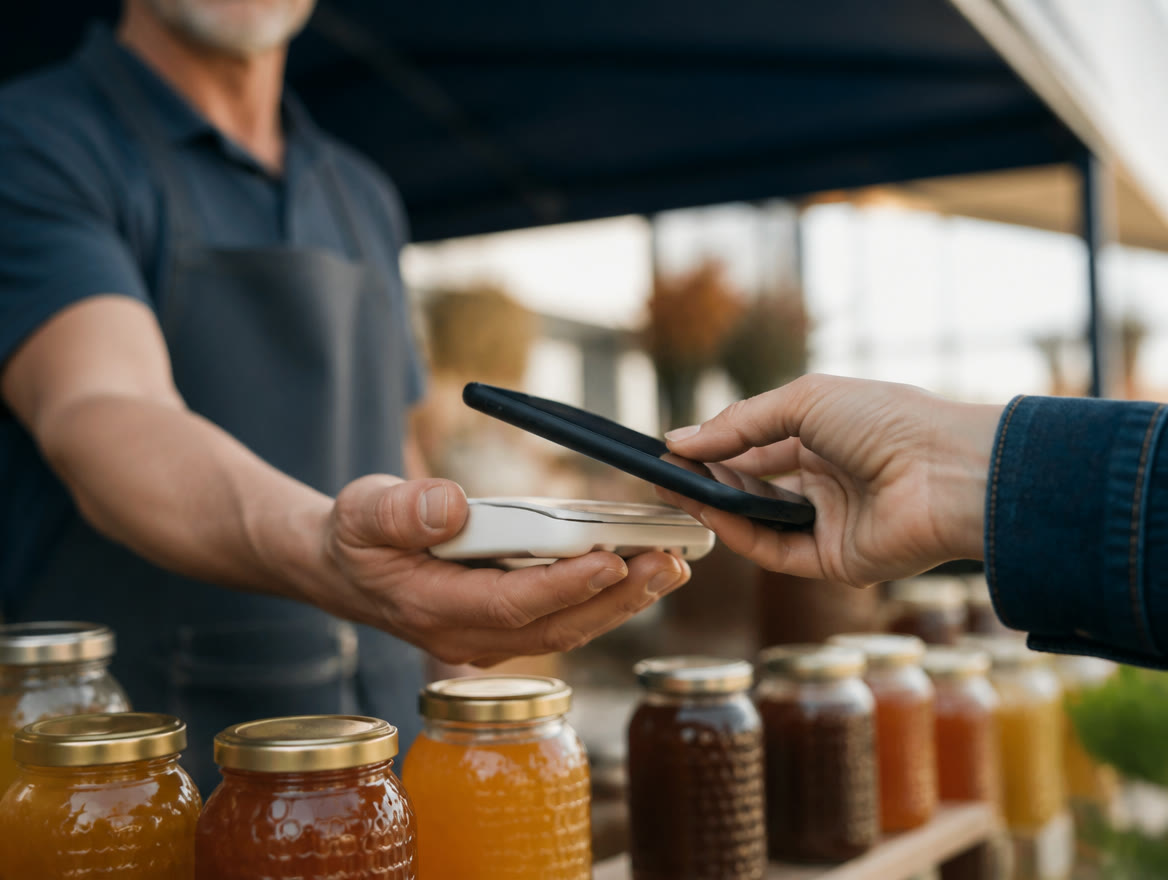
Take the Payment Where the Work Is.
Mobile processing means accepting card payments from a phone or tablet — with a Bluetooth reader, a rugged handheld, or tap-to-pay on the device itself — wherever the customer happens to be. It fits contractors, mobile services, farmers-market vendors, food trailers, and delivery crews. The category ranges from a free app with a clip-on reader to full handheld smart terminals; the right answer depends on volume and workflow. If you have a fixed counter and never leave it, countertop gear serves you better.
Across Texas, mobile processing looks like a plumber taking the card at the kitchen table instead of leaving an invoice, a BBQ trailer in a Waxahachie parking lot running tap-to-pay over cellular, and a market vendor whose Saturday sales settle into the same account as her website. We match the hardware to the job — app and reader for occasional use, smart handheld for daily volume — and configure it before it ships so the first payment works in the field, not after a support call.
The gap between “I’ll mail you an invoice” and “tap right here” is measured in weeks of waiting and a percentage of invoices that never get paid at all.
Problems It Solves
- ★Field jobs end with a promise to pay instead of a payment
- ★Cash-only market stands turn away card-carrying customers every weekend
- ★Consumer payment apps hold funds and offer no real merchant support
- ★Mobile sales and in-store sales settle to different accounts and statements
How We Set It Up
- ★We match hardware to the workflow — SwipeSimple or iProcess for app-based acceptance, smart handhelds for daily field volume — and ship it configured
- ★One merchant account across mobile, counter, and online, so reporting and statements stay unified
- ★Same day funding attached, because field businesses buy materials tomorrow morning
- ★Dallas / Ft. Worth-based support that answers when you’re standing in a driveway with a customer waiting
Mobile Processing Questions, Answered
What do I actually need to take cards in the field?
At minimum, a smartphone, an app, and a reader — or just tap-to-pay on a supported phone. Daily-volume businesses usually step up to a handheld smart terminal with its own receipt printer. We’ll size it honestly to your volume.
Does mobile processing cost more than countertop?
Card-not-present and keyed transactions can carry higher interchange than tapped or dipped cards, which is why we set up readers that take chip and tap in the field. Pricing depends on configuration, and we quote it straight.
Will it work at rural Texas job sites?
Readers work over cellular data, and most apps queue transactions offline to process when signal returns. Our Dallas / Ft. Worth-based team helps you configure offline settings sensibly, since queued transactions carry some acceptance risk.
Explore Software & Gateways
Ready To See It In Action?
Call (214) 838-1818 and a specialist will walk you through the right setup for your business — and ask about up to $5,000 to upgrade your POS.