Dual Pricing.
Show a cash price and a card price — and dramatically reduce processing costs, compliantly.
Built For You, Configured By Us.
See our Dual Pricing Program for the full picture: transparent two-price display, card-brand compliance, and configuration done entirely for you.
Most Texas merchants cut their effective processing cost dramatically in the first month.
- ★Transparent statementsInterchange-plus pricing you can audit line by line — volume, interchange, markup, and fees laid out so you always know your true effective rate.
- ★No long-term lock-inNo liquidated-damages traps or auto-renewing multi-year terms. We keep you by earning it every month, not by holding your contract hostage.
- ★Dallas / Ft. Worth-based live supportCall (214) 838-1818 and a real human in Dallas / Ft. Worth answers — named departments for sales, tech, and success, not an offshore ticket queue or a bot.
- ★Configured for you end to endDual pricing, PCI, hardware, receipts, and signage are set up and verified by us — you get a working, compliant system, not a manual and good luck.
Two Prices. Zero Surprises.
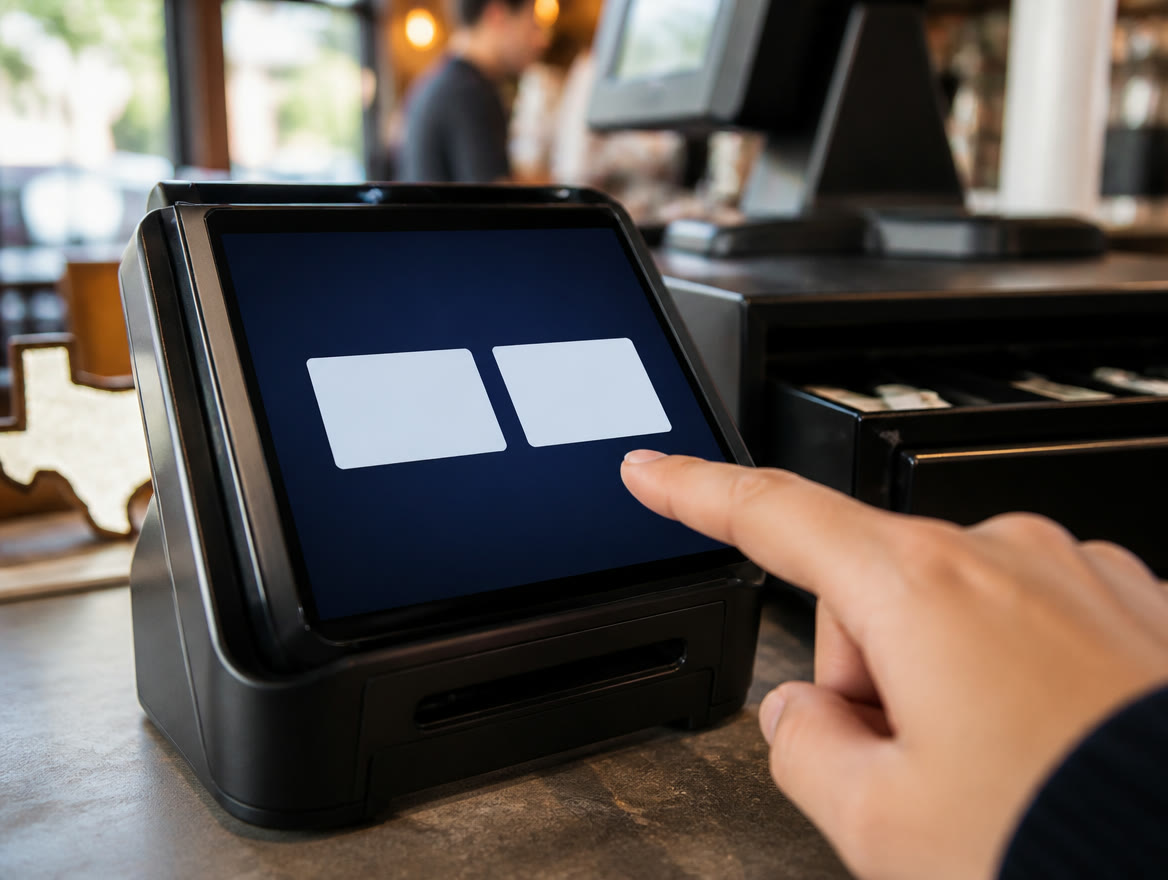
Dual pricing is a program where a business displays two prices — a cash price and a card price — and the customer simply chooses how to pay, with the difference covering the cost of card acceptance. It’s the model every gas station in Texas has used for decades, brought to the counter of restaurants, shops, and service businesses. Done correctly — both prices clearly displayed, modern equipment doing the math — it’s transparent to customers and transformative for margins.
This page is the short version. For full program details — signage, terminal setup, compliance, and what your statement looks like afterward — see the complete Dual Pricing Program page. Weighing it against the alternatives? Our dual pricing vs. surcharging vs. cash discounting guide breaks down how the three models differ and why the distinctions matter legally in Texas.
80–95% — the share of card processing costs a properly run dual pricing program typically offsets.
Problems It Solves
- ★Card fees quietly consuming two to four percent of every sale.
- ★Raising prices on everyone to cover costs created by some payment choices.
- ★Confusing surcharge rules that risk running afoul of Texas law.
- ★“Free processing” pitches that hide the mechanics from customers.
How It Works
- ★Both prices are displayed clearly, and modern terminals present them automatically at checkout — full details on the Dual Pricing Program page.
- ★Customers choose how to pay; nobody is penalized, and cash payers finally stop subsidizing rewards cards.
- ★The program is structured as true dual pricing — see Texas surcharge laws and dual pricing for why that distinction matters here.
- ★We handle signage, setup, and staff training so the rollout takes days, not months.
Dual Pricing Questions, Answered
Is dual pricing legal in Texas?
Yes — displaying a cash price and a card price and letting the customer choose is lawful in Texas, and distinct from credit card surcharging, which faces specific restrictions. Our Texas law guide covers the difference in detail.
How is this different from a cash discount program?
Direction and disclosure. Dual pricing shows both prices up front; cash discounting starts from a card price and discounts down; surcharging adds a fee at the register. They sound similar but are treated very differently — see the comparison guide.
Will my customers push back?
Texans see two-price signs at every gas pump, so the model is familiar. Clear signage and a trained staff line keep it friction-free; most Dallas / Ft. Worth-area merchants find the change is a non-event within weeks.
Explore Programs
Ready To See It In Action?
Call (214) 838-1818 and a specialist will walk you through the right setup for your business — and ask about up to $5,000 to upgrade your POS.